Beyond the Chatbot: Orchestrating Entire AI Companies with Paperclip
The paradigm shift from single-agent task completion to multi-agent organizational management.
Vijayaragupathy
AI Engineer
Beyond the Chatbot: Orchestrating Entire AI Companies with Paperclip
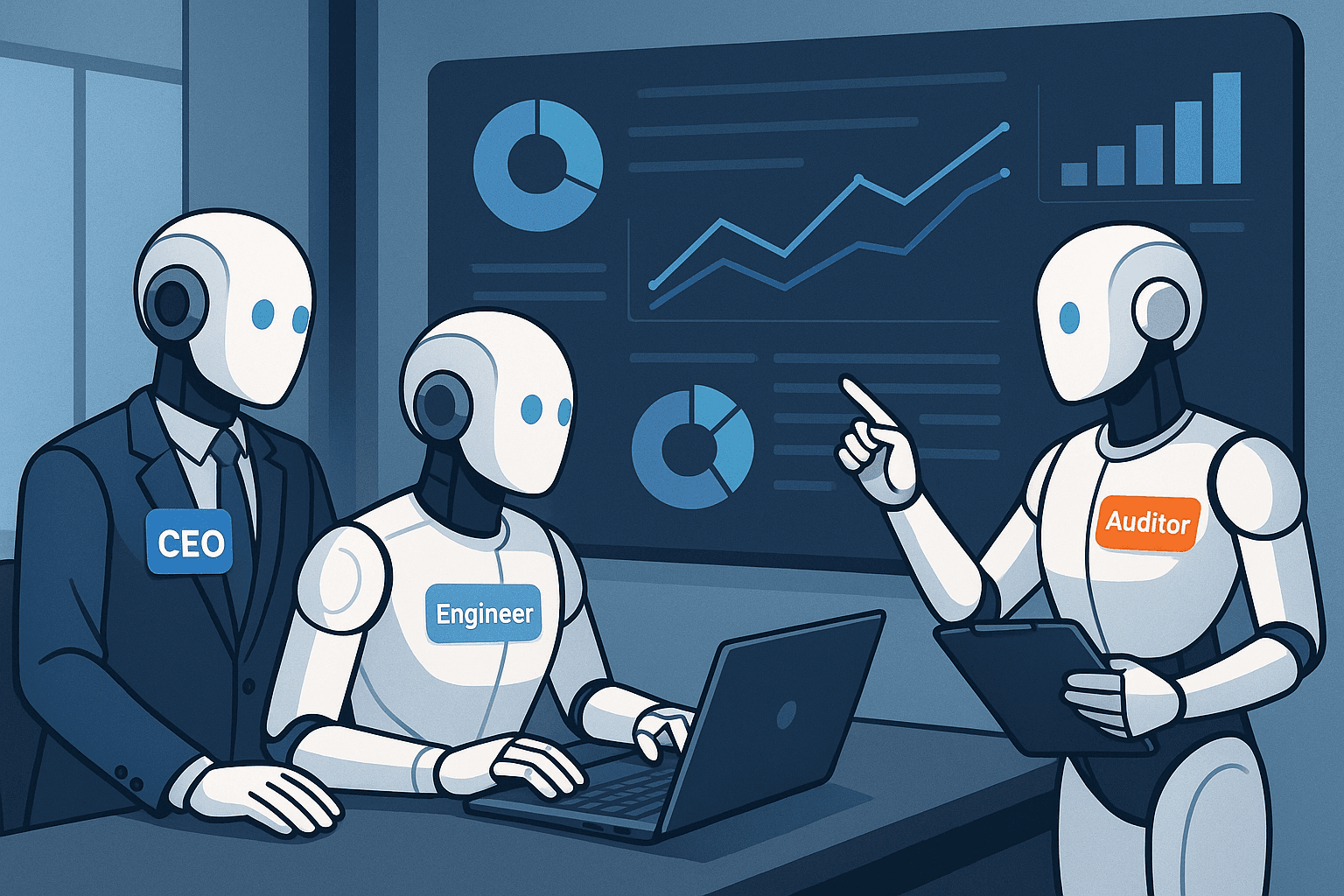
The evolution of AI labor is not just about smarter models—it's about smarter organizations. We're moving from single-agent "chat" interfaces to multi-agent orchestration where AI systems can act as entire companies.
The Evolution of AI Labor
For years, the paradigm was simple: prompt → model → answer. You asked a question, a model generated a response. This worked well for isolated tasks, but it broke down when you needed complex, multi-step workflows with human oversight, cost control, and long-term state.
Now we're entering a new era: organizational engineering. Instead of managing individual prompts, we're managing AI organizations with hierarchies, budgets, and governance.
What is Paperclip?
Paperclip is an open-source platform that turns this vision into reality. It's not just another agent framework—it's the control plane for autonomous AI labor.
At its core, Paperclip provides:
- Org charts for AI: Define hierarchies, departments, and agent roles
- Heartbeats: Scheduled autonomous execution cycles
- Governance: Budget caps, permissions, and human-in-the-loop controls
- Observability: Real-time dashboards and event logging
Core Philosophy: Agents Need Bosses
One of the most important insights from organizational theory is that autonomy requires governance. Paperclip embodies this through:
Budget Caps
Every agent has a defined budget. This prevents "infinite loops" and runaway API costs.
Permission Boundaries
Agents can only perform actions within their defined scope. A "writer" agent can't deploy code.
Human in the Loop
High-level objectives are set by humans. Agents execute the details, but humans approve outcomes.
The Human in the Loop
Paperclip doesn't aim to replace human judgment—it aims to amplify it. You define the "what" (goals, constraints, outcomes). The agents figure out the "how."
This is particularly powerful for:
- Risk-sensitive workflows: Financial systems, healthcare, legal review
- Cost-sensitive operations: Startups with tight margins
- Complex systems: Multi-step workflows with many dependencies
By separating goal definition from execution, you get the best of both worlds: the speed and scale of autonomous agents, with the safety and oversight of human governance.
Why This Matters
The AI landscape is crowded with tools that promise autonomy. But without proper governance, autonomy is just chaos. Paperclip provides the missing piece: structured, auditable, and cost-effective autonomy.
As we build more complex AI systems, the ability to orchestrate entire organizations of agents will become a core engineering skill. Paperclip is the first step on that journey.
Next: How to Use Paperclip
Continue Reading
More from the system
AI Literacy
From Zero to CEO: Building Your First Automated Dev Shop in 10 MinutesA practical, step-by-step tutorial to get users from installation to their first running 'company'.
Autonomy & Strategy
The ROI of Autonomy: Why Paperclip is the Infrastructure for the 1-Person UnicornThe tangible business and operational advantages of using Paperclip over manual agent management.
Benchmarks & Evaluations
Orchestration vs. Automation: How Paperclip Differs from CrewAI, AutoGPT, and LangGraphPositioning Paperclip in the current AI ecosystem and clarifying its unique value proposition.